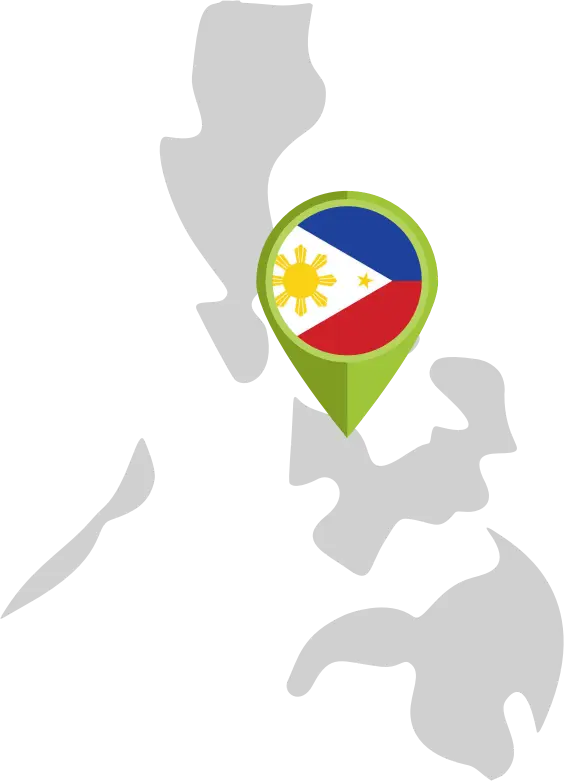
The Philippines is a democratic constitutional republic with a presidential system. Its economy is a developing, newly industrialized economy transitioning from agriculture toward services and manufacturing. The country has significant natural resources, rich biodiversity, and an important role in the Asia-Pacific region.
The earliest inhabitants included Negrito peoples, followed by waves of Austronesian migration. Over time, trade and cultural exchange brought influences from neighboring Asian societies, including Chinese, Indian, Islamic, and other Southeast Asian traditions. Early island communities developed kingdoms and sultanates before European colonization.
Spanish colonization began after the arrival of Ferdinand Magellan in 1521, and the archipelago was later named the Philippine Islands in honor of King Philip II. Catholicism became the dominant religion, and Manila developed as an important center of trans-Pacific trade. The Philippine Revolution began in 1896, followed by the Spanish-American War and the transfer of colonial rule to the United States.
During World War II, the Philippines was invaded and occupied by Japan. After the war, Philippine independence was recognized by the United States on July 4, 1946. The country later experienced martial law under Ferdinand Marcos from 1972 to 1981, followed by the People Power Revolution in 1986, which restored democratic government.
Today, the Philippines has a population of more than 114 million people. Filipino and English are the official languages, while numerous regional languages are spoken throughout the country. Christianity is the dominant religion, and basketball is the country’s most popular sport.