

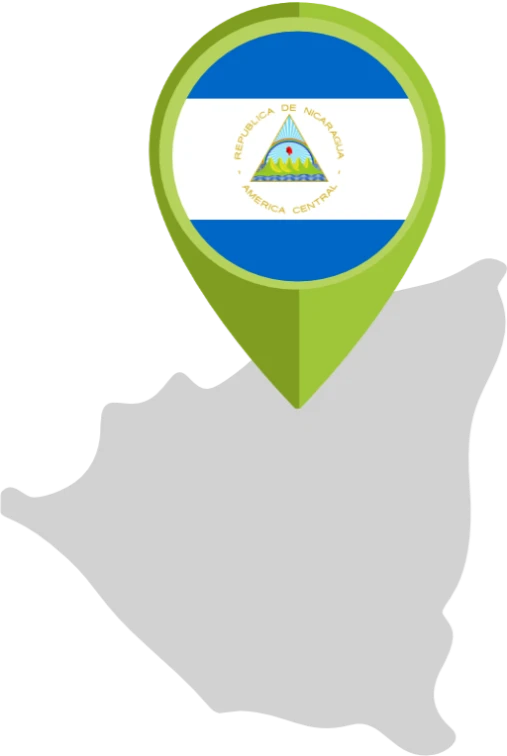
The territory of present-day Nicaragua was inhabited for thousands of years by indigenous peoples, including the Nicarao, Chorotega, and Miskito. In 1524, Spanish conquistadors established the first colonial settlements, incorporating the territory into the Spanish Empire as part of the Captaincy General of Guatemala. For nearly three centuries, Nicaragua remained under Spanish rule, developing an economy centered on agriculture and regional trade.
Nicaragua gained its independence from Spain in 1821, initially becoming part of the Mexican Empire and later the Federal Republic of Central America. It became an independent republic in 1838. Throughout the nineteenth and twentieth centuries, the country experienced internal conflicts, foreign intervention, and prolonged periods of political instability. The Sandinista Revolution of 1979 ended the Somoza family dictatorship and ushered in a new political era marked by civil conflict throughout the 1980s. Since then, Nicaragua has continued to face significant political, economic, and social challenges while remaining one of Central America’s most naturally and culturally diverse nations.